

About us
Summit Capital Advisors offers transaction advisory services to project sponsors and lenders developing and financing large infrastructure, energy, maritime, and industrial policy projects. For over 20 years, Summit has helped federal and state financing programs invest capital to meet policy goals. Our professionals have extensive experience in evaluating complex financing structures and provide data-driven solutions to support clients throughout the project life cycle, from planning to post-close surveillance and monitoring.
Our clients span the federal agencies, nonfederal programs, and project sponsors seeking assistance from government programs. We provide services to the Export-Import Bank of the United States, U.S. International Development Finance Corporation, U.S. Department of Energy's Energy Dominance Financing Program, and U.S. Environmental Protection Agency's Water Infrastructure Finance and Innovation Act loan program, as well as various state governments, and philanthropic impact capital.
Summit's credit program experience
| Agency | Loan Portfolio Size |
Credit Subsidy Modeling |
Underwriting | Program Design & Set-Up |
| USDA Agriculture Loans; Rural Development Infrastructure |
$270B | |||
| DOC Industrial Policy, Semiconductor Manufacturing |
$5.5B | X | X | X |
| Treasury Community Development; Corporate Loans |
$6.5B | |||
| DOE Energy Infrastructure; Project Finance |
$19B | |||
| DFC International Development Project Finance |
$21B | |||
| DOT Transportation; Shipping |
$1B | |||
| HUD Mortgages |
$1,600B | |||
| DOD National Security Technology |
$10+B | |||
| EPA Water Infrastructure |
$8B |
*Source: Outstanding Balances, 2026 Federal Credit Supplement Report
Clients we serve
- Federal and state government
- Infrastructure and transportation
- Housing and government-sponsored enterprises
- Financial institutions
- Impact and development finance
We operate across sectors where precision, compliance, and mission alignment are non-negotiable.
What sets us apart
Summit leads the industry in advising federal agencies that fund large infrastructure, energy, maritime, and industrial policy projects. Since 2010, we have created and developed more than 15 new loan and grant programs. These long-standing relationships enable insight into program requirements, priorities, risk tolerance, approval processes, and past transactions. Our presence in Washington, DC allows regular contact with program leaders, Office of Management and Budget (OMB) federal regulators, and federal balance sheet auditors, whose standards influence financing terms and transaction structuring.
Summit’s partners include two former OMB policy officials who oversaw federal credit programs before joining the firm. We have a strong understanding of OMB Circulars A-129 and A-11, which govern credit receivables and credit risk budgeting.
Our experience combines traditional corporate finance and project finance with public-private risk sharing to serve both applicants and policy officials alike. Over the past 20 years, Summit has advised on more than $200 billion in projects involving various assets like airlines, toll roads, bridges, energy facilities, and semiconductor fabrication plants.
Our approach
Summit combines deep federal domain expertise with modern analytics to help clients navigate regulatory complexity, manage risk, and execute decisive capital strategies.
We integrate technical modeling, policy insight, and hands-on transaction experience. Our advisory work stands up to audit, oversight, and real-world performance.
Services
Summit’s transaction advisory services cover feasibility studies, transaction structuring, and portfolio management. We build on our experience launching more than 15 capital financing programs for both federal and state agencies. This expertise ranges from designing policy-aligned credit products, application and review processes, and credit and special asset policies.
Project Finance & Sponsor Advisory
Summit advises sponsors, offtakers, project developers, and investors on project structuring, procurement, and transaction execution—from planning and bidder outreach through evaluation, contracting, and post-transaction support. We analyze financial proposals, negotiate key project agreements, and advise on acquisitions, public-private partnerships, and financing. Our expertise in federal funding opportunities helps project sponsors and developers access federal investment.
Lender Due Diligence
Summit provides end-to-end financial advisory services, including credit analysis, loan structuring, risk mitigation, term sheets, contract review, and support through closing and post-closing. The firm has deep experience underwriting project finance loans backed by diverse revenue pledges, as well as general obligation debt and private corporate projects.
Portfolio Management
As a leading advisor and portfolio manager for federal lending programs, Summit's complete portfolio services include risk assessment and management, operational support for disbursements and routine tasks, program procedure development, restructuring, and workouts. Our approach follows best practices, rules, and standards from both the commercial sector and unique federal standards.
Leadership
Summit’s leadership includes domain experts with extensive hands-on experience in reviewing, structuring, negotiating, and closing funding agreements and loans from federal sources.
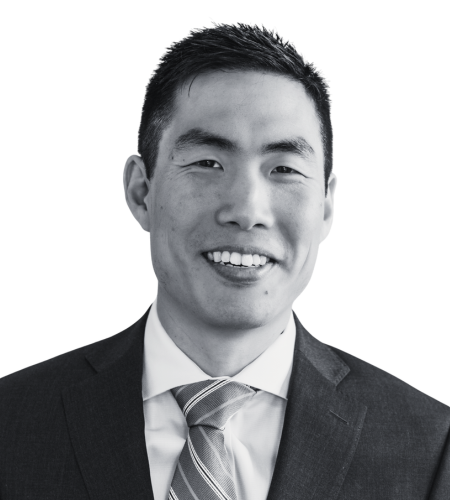
Samuel Seong
Partner | PMP
Samuel Seong leads transaction advisory, underwriting, and credit program modernization across multiple agencies. He advises clients on lending, grant program design, financial analysis, and portfolio management, while driving strategy and cross-agency coordination to strengthen credit programs and expand client impact.
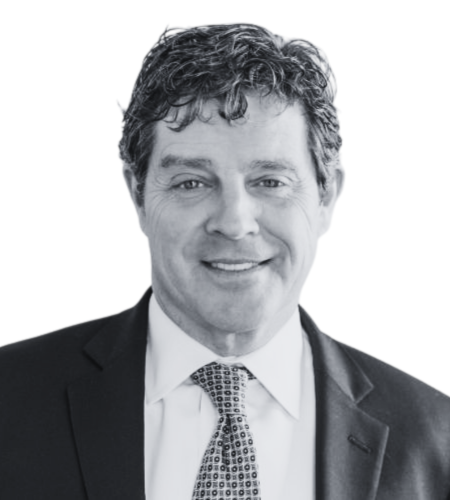
Brian Oakley
Managing Director
Brian Oakley is a recognized subject matter expert who specializes in underwriting transaction advisory and risk management. He possesses a strong understanding of programmatic risk appetite and compliance with OMB regulations. He analyzes the impact of terms and conditions on credit subsidies, offering valuable borrower outreach and technical assistance to ensure financial stability and effective program participation.

Katie Janik
Director
Katie Janik advises public- and social-sector clients on program development, underwriting, and risk management across complex credit and investment portfolios. Her experience spans federal credit programs and philanthropic investments, bringing a collaborative, analytical approach to community-development lending.
Susan Newton-Rhodes
Director
Susan Newton-Rhodes brings deep expertise advising public- and social-sector clients on program development, underwriting, and risk management across complex credit and investment portfolios. Her work spans federal credit programs and philanthropic investments, with a collaborative, analytical approach to community-development lending.
Brian Brussel
Senior Associate
Brian Brussels is an expert in transaction advisory, providing strategic guidance on complex financial transactions. He brings strong proficiency in underwriting due diligence, financial modeling, and risk management, and he excels in negotiating terms, borrower outreach, and stakeholder engagement to secure advantageous agreements.
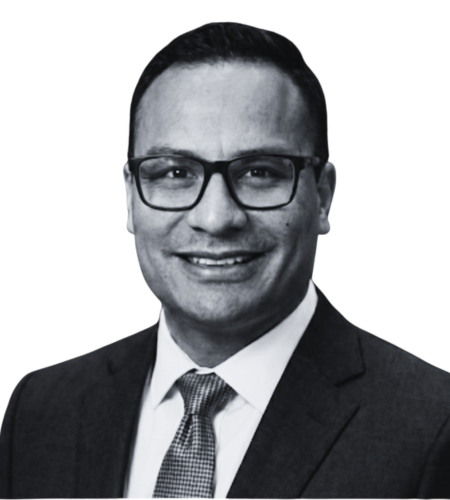
Xavier de la Rosa
Associate
Xavier de La Rosa is a seasoned financial and credit-risk associate with deep expertise supporting federal investment, lending, and transaction advisory programs. He specializes in underwriting, advanced financial modeling, and credit-risk assessment across complex portfolios, bringing extensive experience evaluating borrower capacity, project viability, and regulatory alignment for high-profile federal initiatives.

Mason Groff
Associate
Mason Groff has expertise in financial analysis, credit-risk assessment, underwriting, and portfolio monitoring for federal and nonprofit programs. He supports major initiatives and investments for nonprofit lenders, providing underwriting, due diligence, and risk management while strengthening operations through program development, application review, financial modeling, process design, and stakeholder engagement.
Case studies
Challenge: In January 2018, Howard University experienced a catastrophic failure at its central heating plant, causing millions of dollars in damage and delaying the start of classes for the spring semester. The University installed temporary boilers to heat the campus and initiated a procurement process to secure the services of a private partner to finance and construct a new central utility plant. Summit assisted the University in qualifying and selecting a private energy services provider for this combined heat and power plant.
At the time, the University had limited options to finance the new plant, which was expected to cost over $50 million. The selected energy services company had submitted an offer to take on the financing and ownership of the new plant in return for a long-term service agreement. Summit helped with navigating a complex process for designing a new plant, financing the construction cost, and retaining the services of an energy partner with the capability to implement and operate the project.
Solution: To support this complex undertaking, Summit implemented four workstreams:
- Analyze proposal. Summit personnel evaluated the merits of a proposed design-build-finance-operate-maintain proposal from an energy service provider that offered to deliver the new plant in exchange for a 40-year service agreement.
- Examine financing alternatives. Given the cost and duration of private financing for the new plant, the University requested Summit’s assistance in identifying potential alternative sources of long-term financing. At the time, the University had a sub-investment grade credit rating, making a bond issuance a challenge. However, Summit identified a lender that could finance the project on its balance sheet with the goal of going to the secondary market at a later date. In addition, the lender issued a bridge loan to fund project development activities, including detailed design, demolition, and lead time equipment purchases.
- Structure and negotiate transaction. The development of the project incorporated a progressive design-build approach, providing the University with off-ramps during the transaction structuring and negotiation process. Summit coordinated interactions with the energy partner and facilitated the negotiation process. This effort culminated in a 20-year design-build-operate-maintain agreement that required the energy services provider to deliver a new plant under a fixed-price, date-certain arrangement and to operate the plant pursuant to key performance indicators.
- Provide post-closing support. Summit has provided project monitoring services since the commercial closing of the transaction. These services have included supporting negotiations of delay and compensation events, project budget updates, interim operations and maintenance (O&M) agreement negotiations, and board of directors updates.
Result: The project has experienced delays in completion but has been delivered on budget. Several positive outcomes can be attributed to key decisions made by the University during the project development process, including the following:
- By bringing the financing in-house and owning the new power plant, the University benefitted from clean energy tax credits passed under the Inflation Reduction Act.
- Funding the procurement of long-lead time equipment prevented supply chain-related delays that arose in the years immediately following the COVID-19 Pandemic.
- The negotiated agreement included a significant delay in liquidated damages and other financial penalties associated with contractor-caused delays; the outcome was positive despite these delays.
- Ongoing project surveillance by the University and its advisors has included the same individuals and firms, including Summit. This institutional knowledge has been essential to navigating issues that arise with a highly complex undertaking like a combined heat and power (CHP) plant being constructed on the brownfield urban setting.
The Water Infrastructure Finance and Innovation Act (WIFIA) Program, administered by the U.S. Environmental Protection Agency (EPA), was created to provide long-term, low-cost financing for critical water infrastructure projects. As the program scaled from its initial funding rounds to a mature portfolio exceeding $14 billion in credit assistance, WIFIA needed robust program development capabilities to ensure consistency, transparency, and risk management across all phases of the loan lifecycle. Summit has served as a trusted advisor to WIFIA since its inception, supporting program development activities that underpin the program’s operational integrity and growth.
Challenge: WIFIA faced the task of launching a new federal credit program with evolving statutory requirements, high public visibility, and a diverse range of borrowers. The program needed a scalable framework to handle projects ranging from $20 million to multi-billion-dollar investments, integrate risk management and credit evaluation into operations, standardize application intake and monitoring, and ensure compliance with federal credit and internal control standards—all while meeting aggressive timelines for loan approvals.
Solution: Summit delivered a comprehensive program development solution that combined policy design, process engineering, and technical innovation. The team designed end-to-end workflows for application intake, credit evaluation, and loan closing, ensuring alignment with statutory requirements and best practices. Risk scoring tools and due diligence protocols were developed to assess borrower credit profiles and project viability, enabling consistent, defensible decision-making. Cash flow and credit subsidy models were built and refined to support accurate budgeting and long-term portfolio management. A-123-compliant internal controls and fraud-risk management processes were implemented to safeguard program integrity, while collaboration with EPA, borrowers, and financing partners streamlined negotiations and accelerated project approvals.
Results: Summit strengthened WIFIA’s operational maturity by establishing repeatable, transparent loan evaluation and approval processes that supported more than 75 projects and nearly $30 billion in infrastructure investment. Risk assessment and internal controls were embedded into program operations, improving governance and reducing exposure, while scalable tools and frameworks enable WIFIA to manage a growing portfolio efficiently and in full compliance. These efforts helped position WIFIA as a model federal credit program, showing how disciplined program development can drive infrastructure investment at scale.
Challenge: Beginning in 2021, The California Endowment (TCE) sought to strengthen the management and oversight of its growing Program-Related Investment (PRI) portfolio, which included loans to community development financial institutions (CDFIs) and other mission‑aligned organizations. The portfolio required consistent, disciplined credit review, structured documentation, and timely assessment of borrower performance to ensure financial soundness and alignment with TCE’s investment objectives.
At the time, TCE faced several constraints—the portfolio contained borrowers with varying fiscal year‑ends, complex financial structures, and differing levels of reporting capacity. TCE also began expanding its investment focus to include areas such as environmental and infrastructure projects, increasing the analytical demands on its internal team. To support these objectives, TCE required an experienced partner capable of providing underwriting expertise, ongoing monitoring, and structured financial due diligence. Summit was selected to support underwriting, portfolio reviews, and the refinement of investment oversight processes.
Solution: Summit approached the engagement by embedding itself as an extension of TCE’s investment team. The work began with evaluating new investment opportunities through comprehensive underwriting that included reviewing borrower financial statements, assessing organizational capacity, modeling cash flows, and identifying potential credit risks. Summit also led due‑diligence calls and prepared final investment memos that captured both the financial rationale and anticipated risk mitigants for each proposed transaction.
Alongside underwriting, Summit took responsibility for the annual review of existing CDFI borrowers. This involved examining financial performance, covenant compliance, liquidity trends, and leverage positions. Summit participated in yearly financial statement review calls with each borrower and documented all emerging risks and operational concerns, ensuring TCE had a clear, current view of portfolio health.
Results: Summit’s work helped TCE bring greater structure, clarity, and stability to its PRI investment process. The organization benefited from enhanced underwriting rigor, more transparent borrower assessments, and a consistent framework for evaluating financial risk. Summit’s ongoing monitoring provided early visibility into issues within the portfolio, enabling TCE to make more informed decisions about renewals, mitigants, and follow‑up actions.
The partnership also created operational continuity. Because Summit remained a long‑term advisor across multiple investment cycles, TCE retained institutional knowledge that helped it navigate borrower complexities and investment expansions without the need to build additional internal capacity. Over time, this contributed to a more predictable, well‑documented, and performance‑oriented investment environment.