Our multidisciplinary expertise is purpose-built for federal finance and relies on methods spanning advanced analytics, technology, research, and knowledge transfer.
Explore insights, research, and conversations on federal finance, loans, and grants, informed by Summit’s experience turning complex data into practical decisions.
Meet the people behind Summit and discover how our expertise, curiosity, and commitment to rigorous analysis shape our work and client relationships.
July 11, 2025 •Josh Goldberg

In Part 2 of this series, Josh Goldberg and Mark Hanson expand on the business model of the GSEs, which rests on two pillars: (1) the guaranteed book consisting of securitized mortgage-backed securities largely sold off the to-be-announced (TBA) market, and the (2) retained portfolio, from which GSEs make their net interest margin.
While the guaranteed book is now several times the retained portfolio and are in the several trillions for the GSEs combined, this was not always the case. The 2019 Treasury Housing Finance Reform Plan under the first Trump administration details the evolution the retained and guaranteed portfolio over time. The plan also references one of the five potential exit strategies from conservatorship discussed in Part 3 of this series, where we examine the range of GSE reform options likely to be considered by the current administration.
GSE reform is an ongoing process, and under conservatorship, the GSEs have come a long way. This is the focus of Part 2 of this series. Mark details the important role of the TBA market to provide liquidity in the market, and how a common securitization solution was developed during conservatorship. Josh then describes the adoption of a shared capital framework and the development of different types of credit risk transfer. In addition, initiatives for increasing purchase certainty through upfront underwriting due diligence have made selling representation and warranty waivers more accessible.
In the decades since the GSEs were first brought into conservatorship, markets have changed significantly and so have the GSEs. If the GSEs of today are significantly better managed than they were before they were brought into conservatorship, is there still a case for an exit from conservatorship? And if the GSEs exit from conservatorship, in what form should that take? Part 3 of this GSE Reform series will explore these questions in greater detail. Stay tuned!
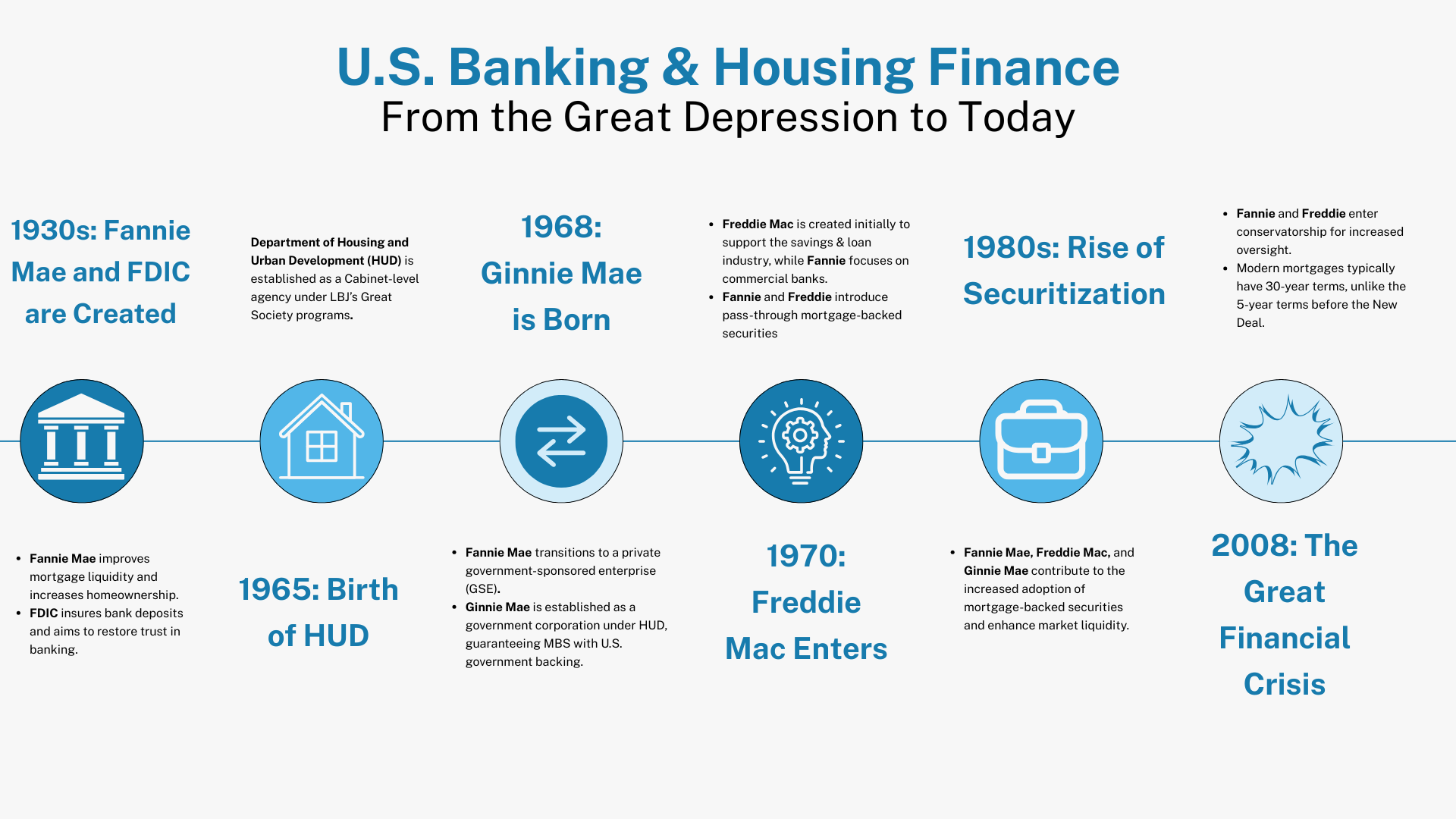
Listen to the podcast below and let us know what you think!